
The first solo crossing of the Atlantic didn’t just shrink distance. It expanded possibility. Each Embry-Riddle Aeronautical University graduate featured here renews that legacy of propulsion, turning knowledge into lift and purpose into progress. Their achievements remind us that innovation, once airborne, powers our future. These are only a few Eagles who have built our global story. We look forward to what the next 100 years will bring.
STEVE ALTEMUS (’87)
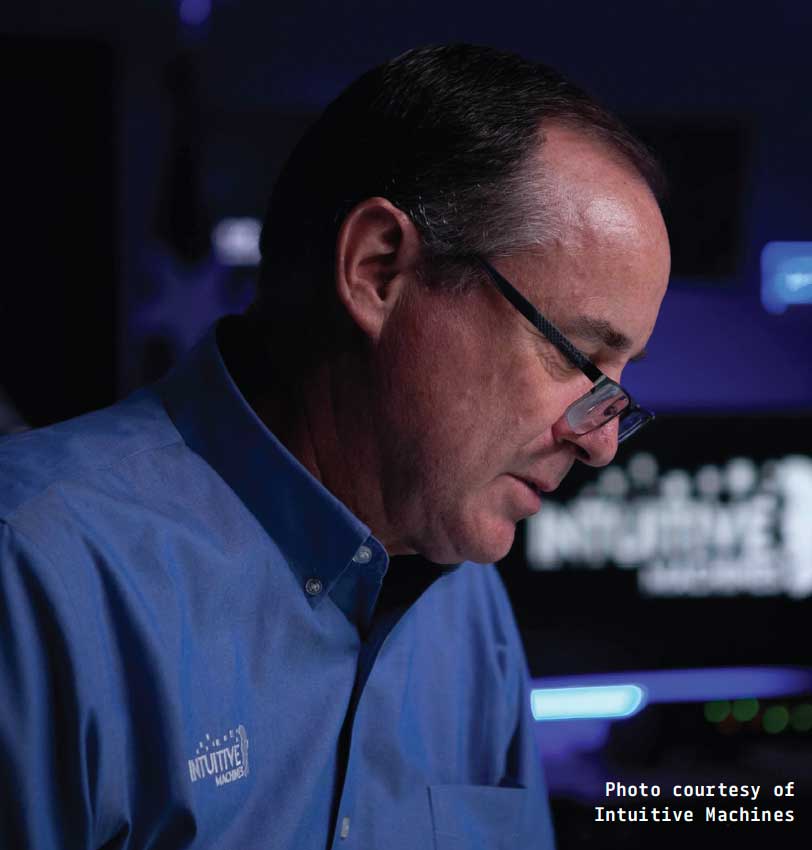
Steve Altemus built a bridge to the moon with blueprints and nerve. After earning his Aeronautical Engineering degree, he advanced through NASA at the Johnson Space Center before asking the question that launched a company: Why should only governments reach the moon? In 2013, he co-founded Intuitive Machines – built to land and create, not just orbit.
Its Nova-C lander, Odysseus, touched down on Feb. 22, 2024, carrying Embry-Riddle’s EagleCam CubeSat – the first university student-built payload to reach the lunar surface. Even when the lander came to rest in an unexpected position, the mission pressed on, resetting systems and adapting on the fly. For Altemus, that resilience was the point: engineering as improvisation, discipline meeting daring.
“We built a company that built a spacecraft,” he says. With recent acquisitions of complementary technology companies and new NASA contracts, he’s turning that first launch into infrastructure for a lunar economy – proof that exploration, before it becomes reality, is a discipline of the highest order.
GEN. CHARLES Q. BROWN JR. (RET.) (’95)

In 2020, when Charles Q. Brown was named the U.S. Air Force chief of staff, he shared the tenets that guided his career: “Execute at a high standard, be disciplined in execution, pay attention to details, and have fun:’ His motto became “Accelerate change or lose” as he advocated for agile combat and for airmen to develop skills beyond their specialty. He persuaded Congress to retire aircraft such as the A-10 and make way for newer technology. In 2023, he would bring that same direct approach as chairman of the Joint Chiefs of Staff.
A fighter pilot by training, he was the first chairman of the Joint Chiefs from the Air Force in 18 years. He earned his call sign “Swamp Thang” while flying an F-16A out of Homestead Air Force Base when his plane was struck by lightning and caught fire, causing him to eject over the Florida Everglades.
After his retirement from the Air Force after 41 years, he became an Executive in Residence at Duke University. In an address to students, he explained that being the chief military adviser to the U.S. president meant pursuing clarity. “It is not about presenting one answer;• he says. “It is about making sure the president understands the tradeoffs, what you gain, and what you risk losing.”
CHRIS BROWNE (’19)
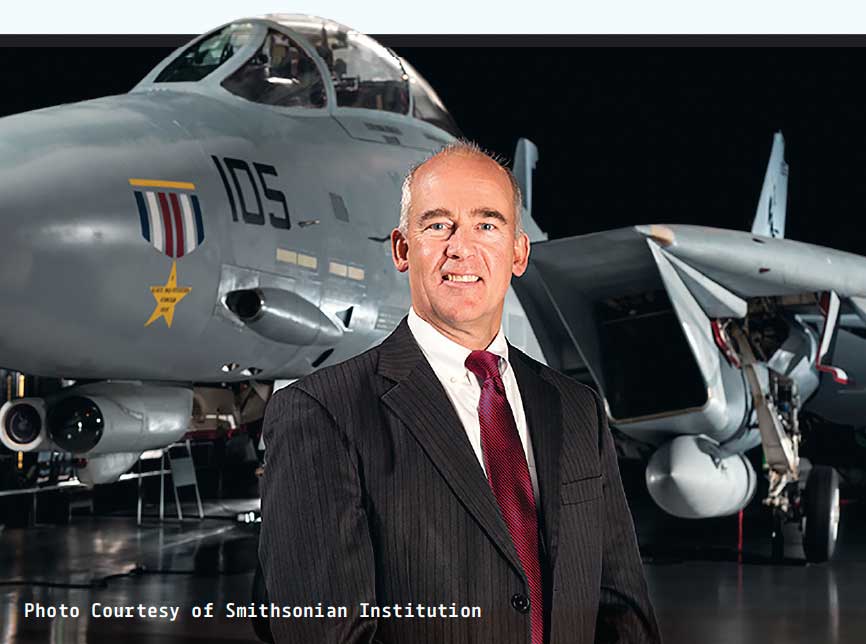
Chris Browne’s life could fill a hangar: naval aviator, airport manager, museum director. At one time, he launched an F-14 Tomcat from a carrier deck. Decades later, he stood before that same jet – now on display at the Smithsonian’s National Air and Space Museum – and felt the echo of his own past in the metal.
“I can’t tell an Embry-Riddle student or graduate: This is what you need to do. However, I was prepared when opportunities presented themselves thanks to wonderful mentors and the fact that I surrounded myself with people who encouraged my drive and passion.”
—Chris Browne, John and Adrienne Mars Director of the Smithsonian’s National Air and Space Museum (’19)
His career traces the modern story of aviation, from cockpit to command post to curatorship. As an executive leading Washington Dulles International Airport’s expansion, he helped shape one of the nation’s most ambitious airport modernization efforts. He later guided airports through 9/11 and the digital transformation of air travel, learning that leadership depends on adaptation.
Today, as director of the National Air and Space Museum, Browne treats history as a living instructor. “The past can illuminate the future,” he says. In classrooms and hangars, he helps young people feel the wonder that once launched him into aviation. Browne doesn’t simply preserve history – he brings it to life – each restoration and exhibit another chance to pass forward the discipline and imagination of flight.
VIVEK LALL (’93)
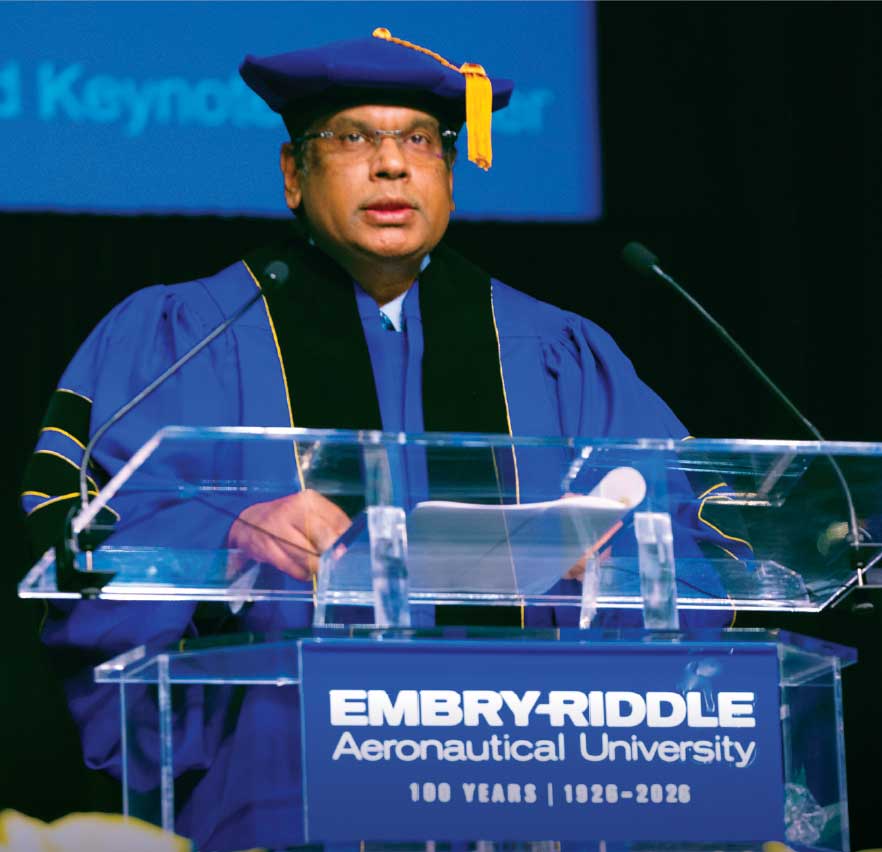
Vivek Lall built his career at the intersection of engineering, diplomacy and global security, where technology does not just fly, it signals intent. An Embry-Riddle graduate with a master’s in Aerospace Systems, Lall moved from advanced engineering roles into executive leadership, helping shape how nations collaborate in air and space.
Across senior positions at Lockheed Martin, The Boeing Company and now as chief executive of General Atomics Global Corporation, Lall has guided some of the world’s most consequential aerospace programs. When India needed uncrewed systems but lacked procurement pathways, he did not simply negotiate contracts. He helped redefine how allied nations share sensitive technology, aligning certification standards, security architectures and maintenance protocols across defense establishments with different operating assumptions.
Today, Lall often serves as an interpreter of the future for global leaders, translating emerging aerospace capabilities into strategic choices that shape national security and economic policy. In a recent commencement address on the Daytona Beach Campus, he told graduates: “Whether you design aircraft, develop new technologies, or serve your community, the key is to stay curious, stay ethical, and stay grounded in your values.”
LT. GEN. STAYCE HARRIS (RET.) (’87)
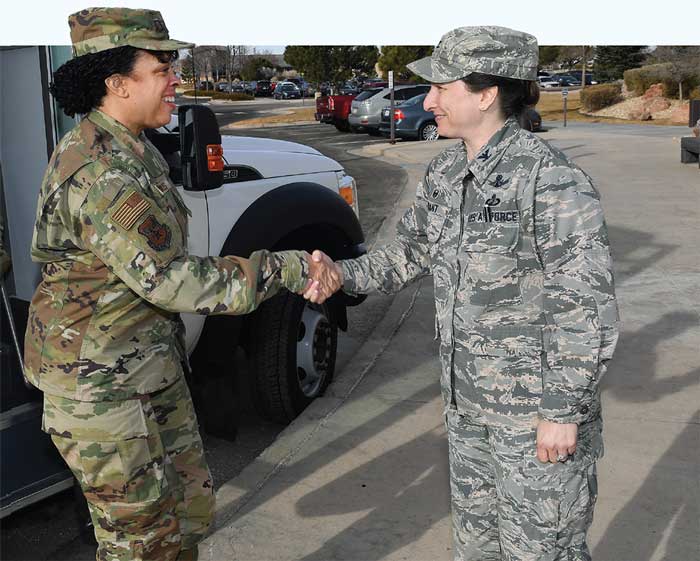
Retired Lt. Gen. Stayce Harris grew up immersed in service, her father a U.S. Air Force airman and her childhood spent moving from base to base. She joined ROTC in college, earning her bachelor’s in engineering, and later her master’s in Aviation Management from Embry-Riddle. Then she set her sights on flight, a world once closed to women and people of color.
When Harris earned her pilot’s wings in 1984, she flew C-141 Starlifters before transitioning to the Reserves and flying commercial for United Airlines. As a reservist, she found herself in charge of providing aid where it was most needed. The squadron she commanded in California flew firemen and supplies to New York City after 9/11. While serving under United States Africa Command, she led pandemic disaster response to nations that were experiencing disease outbreaks and learned the effectiveness of listening to the needs of civilian populations in crisis.
She rose from squadron to wing command to senior leadership at the Pentagon, retiring as Inspector General of the Air Force. In naming her scholarship at Embry-Riddle after the Tuskegee Airmen, she is not only honoring the past but opening runways for the next generation to fly their own airplane and chart their own trail.
SUSAN HORSTMAN (’75)
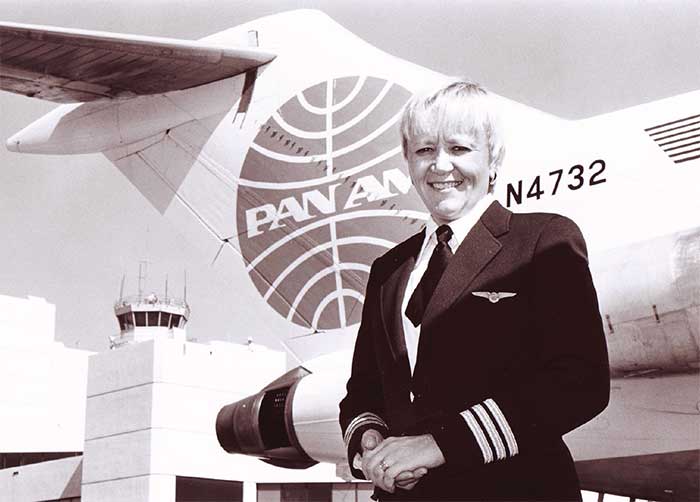
When Susan King graduated from Embry-Riddle in 1975 with a bachelor’s degree in Aeronautical Studies, she was the only woman in her senior class. She got used to being the only one for a while, but she made sure that story would change one day.
Susan, who married fellow Eagle Chriss Horstman (’75), became the first woman commercial pilot for National Airlines in 1979 (National would merge with Pan Am World Airways in 1980, where she was still their first female pilot). She was included in the November 1979 issue of The 99 News, in a 50th anniversary celebration of the International Women Pilots Association, which highlighted a generation of women who were starting to enter aerospace careers.
After accruing more than 17,000 flight hours, Horstman retired from commercial flight in 1991 when Pan Am declared bankruptcy. In 2003, she founded Cornerstone Aviation flight school in Salt Lake City. In 2015, while promoting flight at a National Girls Aviation Day, she told the local newspaper that being a pilot is “the best job in the world — you get a front-row seat to travel the world!”
JARED ISAACMAN (’11)

Jared Isaacman never asked for permission to dream. As a teenager he built a payment processing company from his parents’ basement and turned Shift4 into an industry leader before he could rent a car. He broke a world record circumnavigating the globe in a Cessna Citation CJ2, then set his course for orbit. In 2021 he commanded Inspiration4, the first mission to space crewed by commercial astronauts, and in 2024 led Polaris Dawn, reaching farther into space than any crew since Apollo 17. Each mission tested new technology, expanded human reach and reflected Isaacman’s conviction that exploration is a shared endeavor.
“We have to keep going, just as the explorers did hundreds of years ago, and along the way, life will be better for humankind. So we don’t have a choice not to proceed. We just have to go with caution.”
—Jared Isaacman (’11)
He invited Embry-Riddle students into that journey, engaging them in the development of systems and experiments that advance the frontier. “Humanity doesn’t have the option to stand still,” he says. From cockpit to capsule, his trajectory fuses entrepreneurial audacity with astronaut precision. Isaacman’s story came to define the new frontier of flight when, in December 2025, he was confirmed as NASA’s 15th administrator.
MORIBA JAH (’99)

Moriba Jah doesn’t talk about space like a frontier. He talks about it like a neighborhood. Once a satellite engineer at NASA’s Jet Propulsion Laboratory, now a MacArthur Fellow “genius,” he studies the orbital junkyard of dead satellites, shards and forgotten missions — and calls it what it is: pollution. At Embry-Riddle he learned the laws of lift and drag. Years later he applied them to civilization itself, balancing innovation and consequence.
As professor at the University of Texas at Austin, and as co-founder of Privateer with Apple’s Steve Wozniak, Jah built Wayfinder, an open-source platform that maps every known object circling Earth in real time. The goal is a shared awareness of the fragile environment that makes modern life possible.
Jah treats orbit as an ecosystem — finite, fragile, shared. His moral math is simple: progress demands stewardship.
MICHAEL DURANT (’95, ’97)
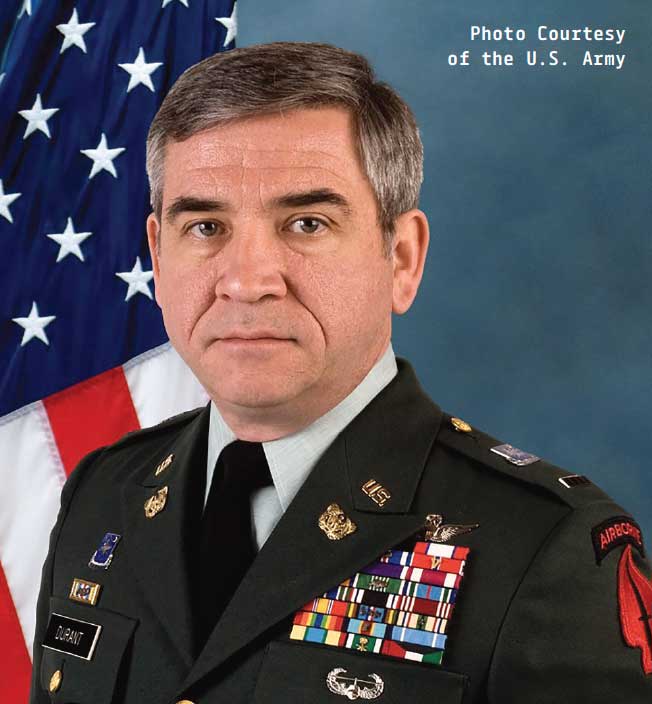
Michael Durant learned early that courage doesn’t shout — it endures. A U.S. Army aviator who mastered the Black Hawk in chaos zones, he found himself grounded in the most unforgiving of places: Somalia, 1993. His helicopter went down during the Battle of Mogadishu, and for 11 days he was held captive — injured, starved, refusing to break.
After his recovery, he continued to fly with the 160th Special Operations Aviation Regiment until his retirement in 2001.
Upon returning home, he built something lasting. As founder and CEO of Pinnacle Solutions, he turned the lessons of war into a framework for precision, training and technical mastery used by militaries worldwide. He transformed trauma into instruction, experience into opportunity. His company was an integral part of creating Embry-Riddle’s Worldwide virtual labs. The Virtual Crash Lab helps students learn accident investigation no matter where they live, and the Virtual Aerial Robotics lab allows students to design their own uncrewed aerial systems and test their capabilities.
Durant’s story isn’t legend. It’s work. Durant shows that resilience isn’t a single act of bravery — it’s the lifelong decision to take off again after the hardest landing.
CMDR. SUSAN STILL KILRAIN (’82)
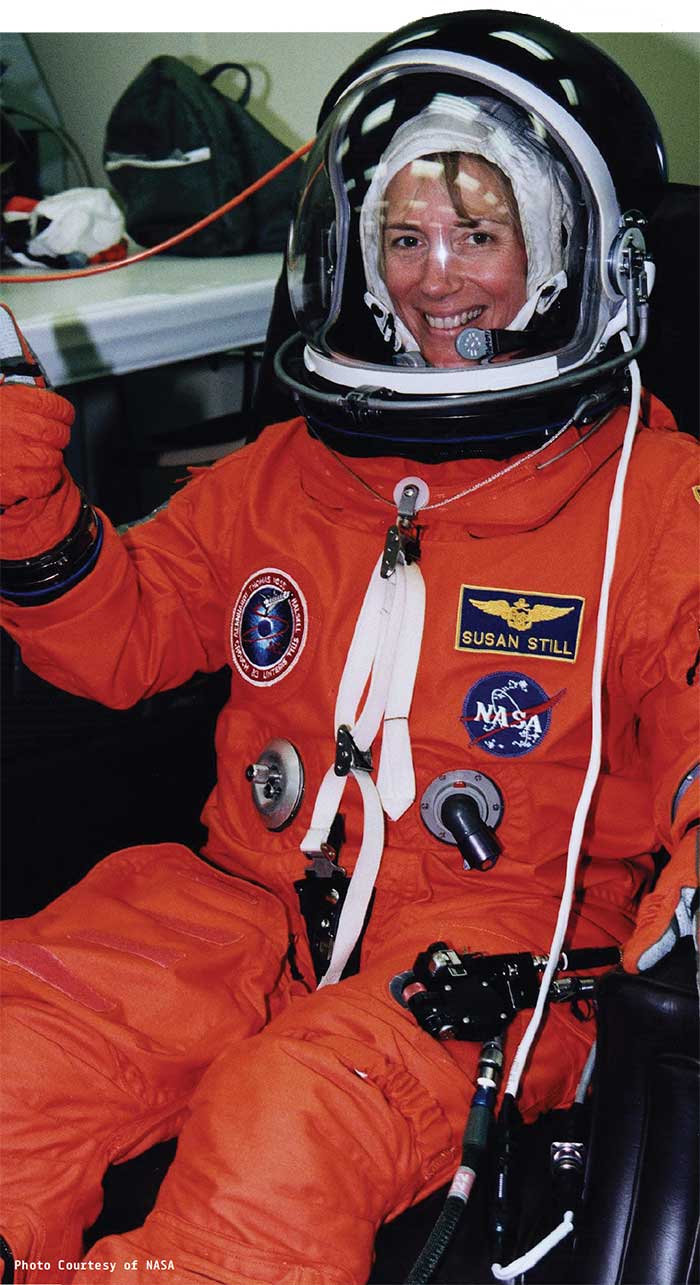
Cmdr. Susan Still Kilrain learned early that the barriers to space were perceived more than
real. The first graduate of Embry-Riddle to join the NASA astronaut program, she earned a degree in Aeronautical Engineering before becoming a naval aviator. She became one of the youngest people – and one of only three women – to pilot a space shuttle. In 1997 she piloted STS-83 and STS-94, logging nearly 20 days in orbit. Beyond space, she served NASA in Mission Control as CAPCOM flight controller, communicating with astronauts directly, and in legislative affairs in Washington, D.C. During her career, she flew more than 3,000 hours in over 30 aircraft and received the Defense Superior Service Medal.
“I did approach my father nervously thinking he wasn’t going to support my dream, and said
‘Hey, I want to be an astronaut.’ And thankfully he said, ‘You can be anything you want to be.”
—Cmdr. Susan Still Kilrain (’82)
Today, Kilrain channels her experience into mentorship and advocacy, urging the next generation to aim for a career that excites them, just like she did.