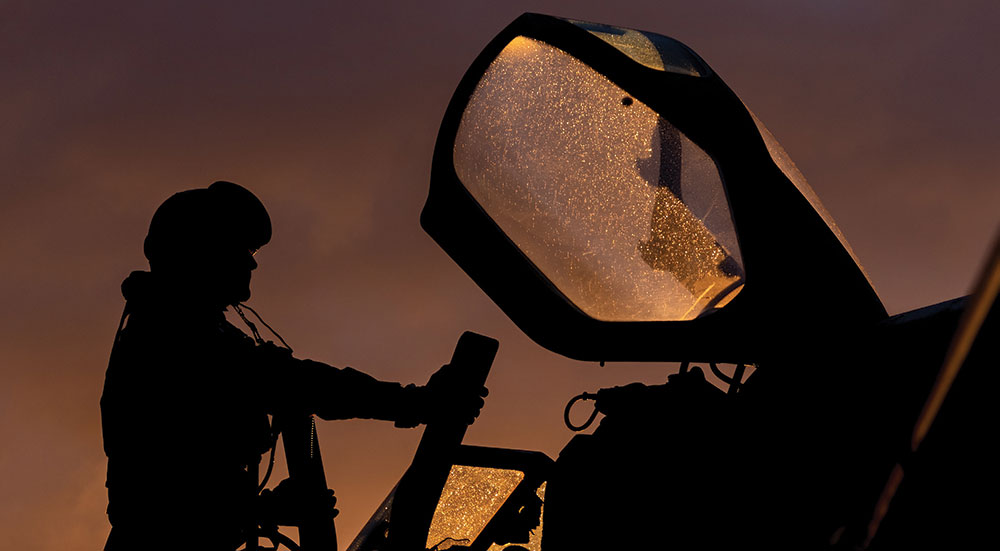
At some point in your time at Embry-Riddle Aeronautical University, whether in class or at commencement, you met someone who influenced the course of the university and the lives of its students. These rare souls kept a steady course in stormy seas. They built campuses, buildings, colleges, degree programs. They kept planes flying, libraries open and the lights on. They loved teaching you and your fellow alumni so much that they retired from Embry-Riddle or are still here. Tell us about the Eagles who shaped you at liftmag@erau.edu.
VISIONARIES AND BUILDERS
JOHN C. ‘JAY’ ADAMS JR. (HON. DOC. ’08)

Jay Adams paired sharp business instincts with deep community commitment for more than four decades to transform the university into a global leader.
In 1964–65, when the university sought a new home, he joined the Committee of 100 and threw himself into Operation Bootstrap — a grassroots relocation of the campus from Miami to Daytona Beach powered by financial contributions, volunteer labor and borrowed trucks.
As trustee and later board chairman for 41 years, Adams led capital campaigns that produced the ICI Center, the Crotty Tennis Complex and the University Sports Complex — projects that shaped the university’s identity. Adams Hall stands today as a tribute to his stewardship. He and his wife, Leila, were Embry-Riddle’s most dedicated basketball fans, attending nearly every game and championing athletic scholarships and opportunities. Adams’ business discipline and heartfelt loyalty left a lasting imprint on the campus he helped build since his passing in 2019.

JOHN AMORE (’72)
A Vietnam Army helicopter pilot who went on to lead a global insurance enterprise, John Amore has served on the Board of Trustees since 2010, offering perspective that helped shape Embry-Riddle’s financial strength and future direction. Through the Amore Family Endowed Scholarship, he supports students navigating the same transition from military to civilian life that shaped his own journey.
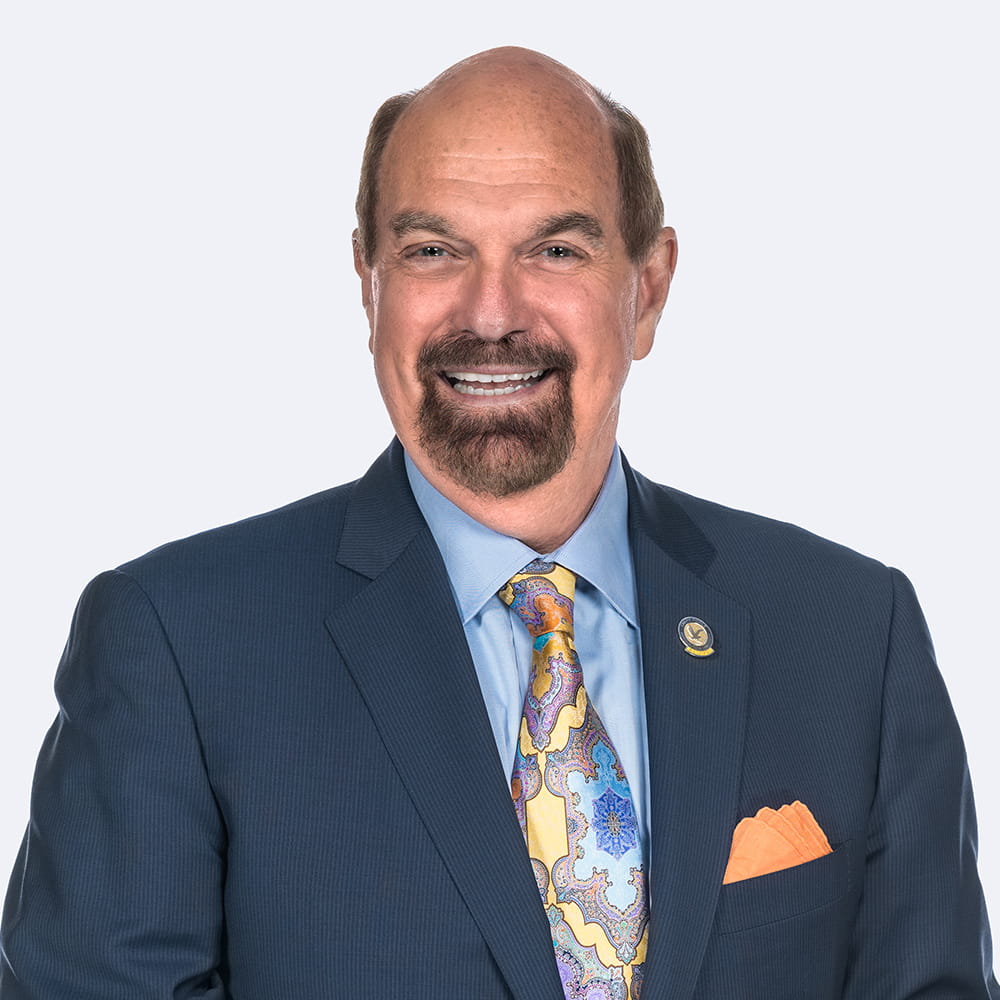
KEN DUFOUR (’85, ’89)
Ken Dufour built a career advancing avionics systems — from windshear detection to traffic collision avoidance and satellite communications — improving safety across global aviation.
A trustee since 1998, Dufour is one of the longest serving trustees. He’s known for championing students, making sure to engage with them while on campus ahead of board meetings.
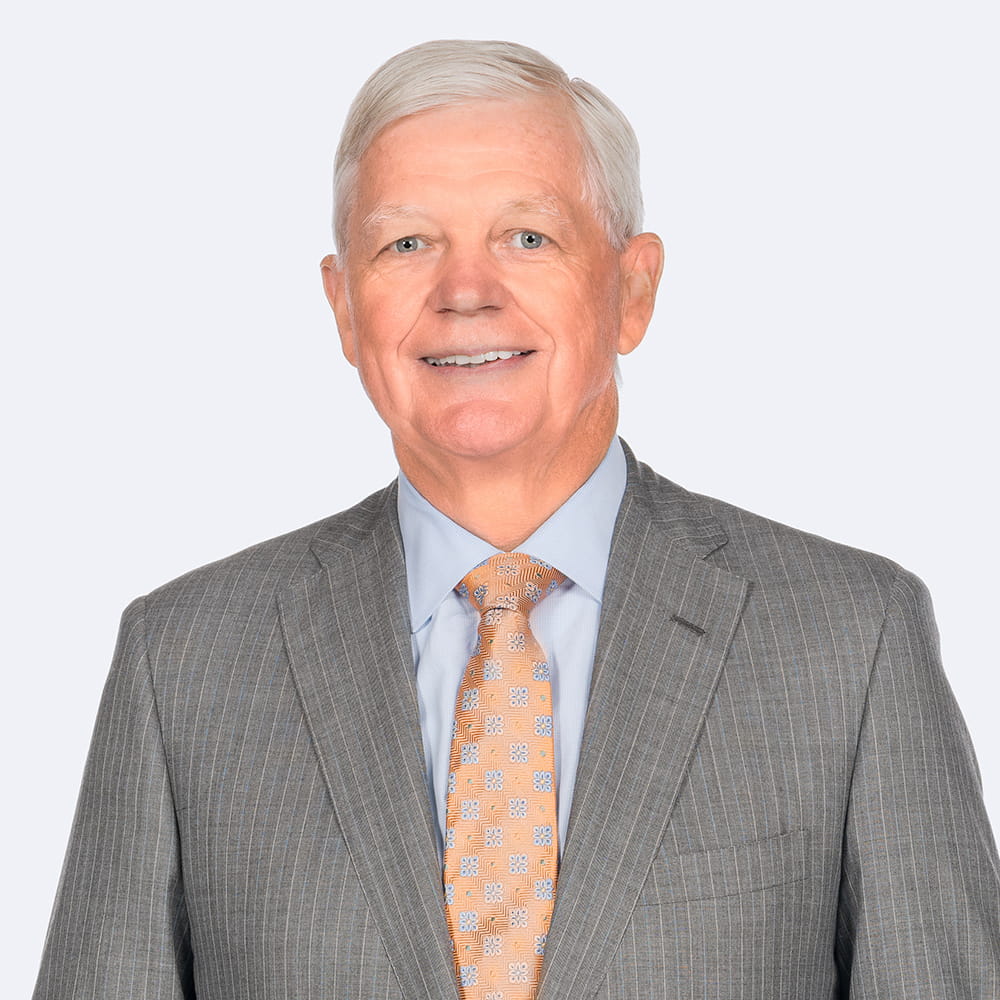
JIM HENDERSON
Jim Henderson, chairman and CEO of AssuredPartners, has helped guide Embry-Riddle with steady judgment since joining the Board of Trustees in 2003, including service as board chair. He supported major capital efforts, strengthened financial foundations and championed students, including support for the Eagles Care fund. The Jim
W. Henderson Administration and Welcome Center reflects his lasting commitment to the university.
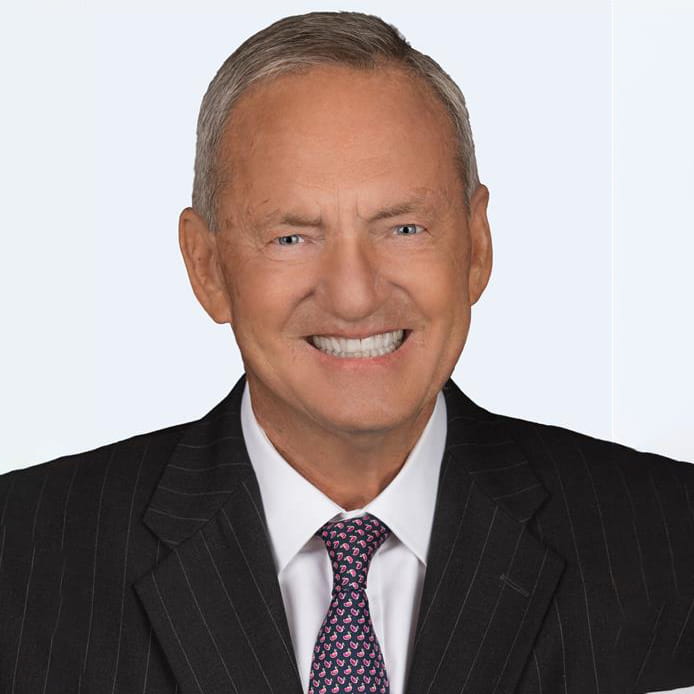
JOSEPH MARTIN (’74, HON. DOC. ’18)
Joseph “Joe” Martin, a Vietnam helicopter pilot turned semiconductor executive, has served on the Board of Trustees since 2005, including as treasurer. Known for steady financial stewardship and quiet humility, he helped guide Embry-Riddle through significant growth, often saying he is grateful to have “played a small part” in the university’s progress.
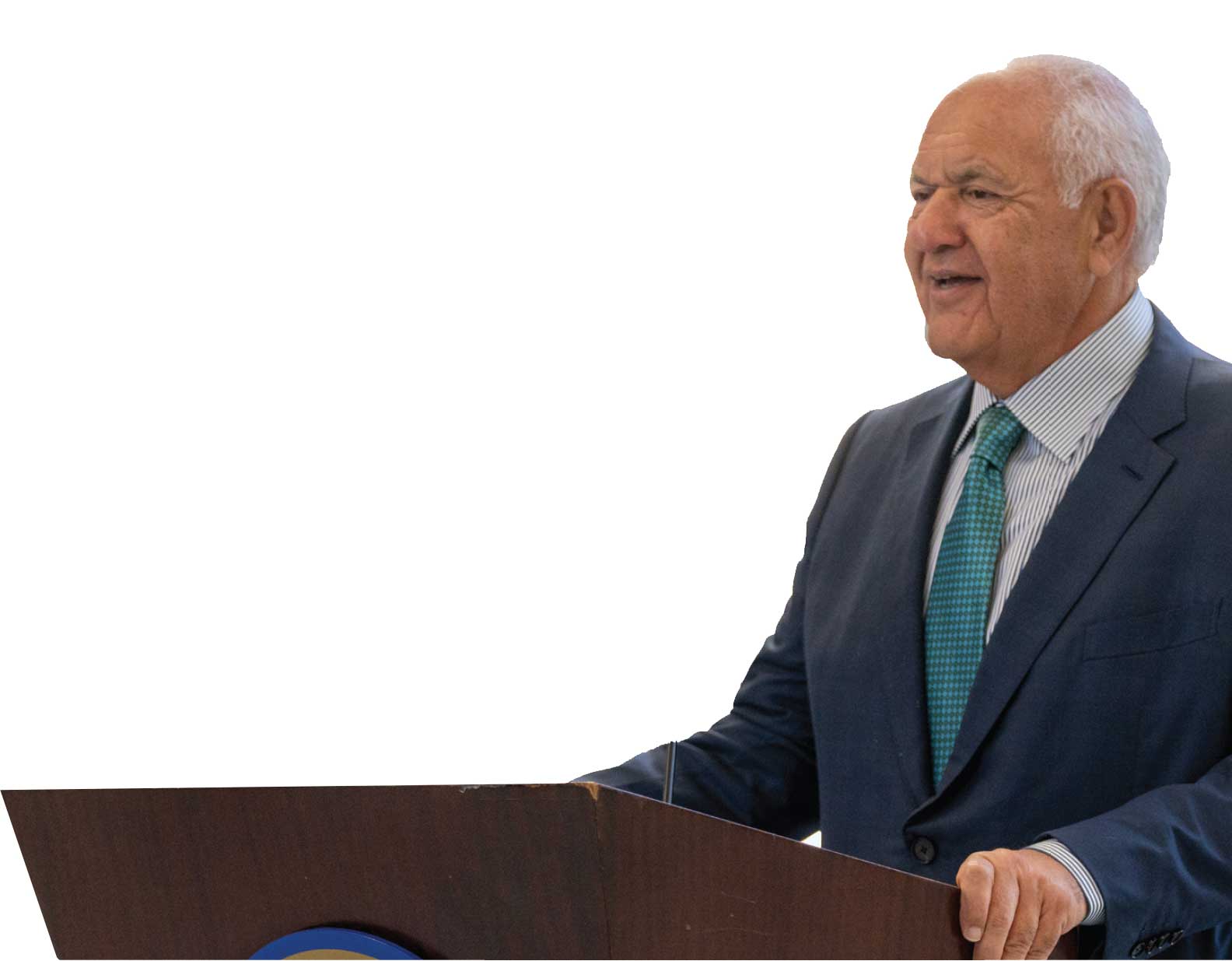
MORI HOSSEINI
(’78, ’79, ’82, HON. DOC. ’13)
When Mori Hosseini arrived at Embry-Riddle’s Daytona Beach Campus in the 1970s, his goal was simple: earn a degree and begin a life in aviation. He completed his bachelor’s and master’s degrees, and in 2014, he became the first alumnus to chair the Board of Trustees.
Hosseini joined the Board in 1999 and served on key committees. As Chairman and CEO of ICI Homes, he has managed major projects and long-term growth – skills he applies to the university. He has championed a 50-year master plan, supported enhancements on the Prescott Campus and led efforts that created the Student Union in Daytona Beach.
He has brought top voices from aerospace, business and education onto the Board and secured transformational state support for academic programs, research and infrastructure. His advocacy continues to strengthen laboratories, residence ha]ls and athletics, including upgrades to the ICI Center. “The way I see it, the people who came before me, helped me get here; and the people before them, helped them;” Hosseini says. “And I need to help the future generation.”
“The way I see it, the people who came before me, helped me get here; and the people before them, helped them. And I need to help the future generation.”
—Mori Hosseini (’78, ’79, ’82, HON. DOC. ’13)
DAVID B. O’MALEY
David B. O’Maley’s philanthropy has elevated Embry-Riddle’s business programs, culminating in the naming of the Daytona Beach Campus business college in his honor.
A former chief executive who led Ohio National Financial Services to national prominence, Trustee O’Maley has chaired the Business Partnership Committee and supported Development and Finance committees. His giving fuels faculty excellence, student scholarships and the college’s executive-in-residence program that connects classrooms to industry.
O’Maley has been dedicated to serving the university as a trustee since 2014 and continues to support the college that bears his name.
“Every student needs some grounding in business,” he says, “so they can become leaders in the industry.”

S. HARRY ROBERTSON III
(HON. DOC. ’72)
S. Harry Robertson III refused to accept that a pilot could survive a crash only to die by fire. An engineer, inventor and lifelong aviator, Robertson devoted his career to making flight safer for all who take to the sky. His self-sealing “Robbie Tank” became the global standard in crash-worthy fuel systems and is credited with saving thousands of lives.
Inducted into the National Aviation Hall of Fame, Robertson paired innovation with education. He served for several decades on the Embry-Riddle Board of Trustees, and his philanthropy and leadership created the Robertson Safety Institute in Prescott, which includes the crash lab, the most comprehensive facility of its kind. For Robertson, innovation was both technical and moral — honoring every aviator who never made it home by making it so that today’s aviators are as safe as possible.

DAVID L. ROBERTSON
(HON. DOC. ’18)
Through leadership and philanthropy, David L. Robertson — like his safety-pioneer father, S. Harry Robertson III — reinforced the belief that studying the past protects every flight that follows. A professional pilot with more than four decades in aviation, David Robertson brought broad experience to the Board of Trustees, where he chaired the Flight Safety and Education committees.
He advanced national safety efforts through the FAA Flight Operational Quality Assurance Demonstration Project and supported safety education across numerous professional organizations. Robertson and his wife, Andrea, supported a vast range of Embry-Riddle initiatives, including EcoCar, the SAE Hybrid Race Car, the Green Flight Challenge, the women’s SAE Mini-Baja car project, the safety science program, library funds and the David and Andrea Robertson Endowed Scholarship.
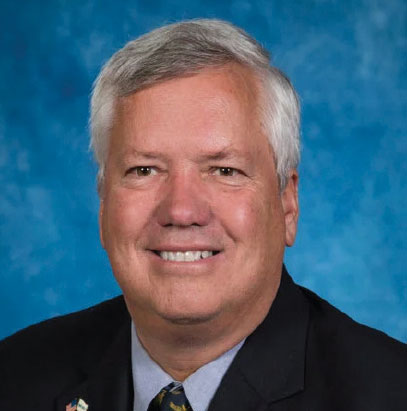
RAYMOND B. SIGAFOOS
Faith quietly shaped Raymond Sigafoos’s legacy — faith in education, in people and in Embry-Riddle’s future. As trustee and benefactor, Sigafoos created the university’s first planned gift, setting an example that encouraged others to follow. The Raymond B. Sigafoos Endowed Scholarship continues to open doors for students who dream of flight.
Sigafoos blended the precision of a CPA with the warmth of a mentor. His generosity helped build a culture where giving reflects purpose and lifts the community. His influence endures in the students whose success carries his belief forward.
“Ray Sigafoos believed deeply in people and in the power of education to change lives,” says Steve Bobinsky, assistant vice president for Philanthropy. “His faith in Embry-Riddle’s mission, along with his vision, integrity, attention to institutional history and philanthropic efforts helped shape the university we know today.”

JOHN R. WATRET
Embry-Riddle’s global reach reflects the vision of John R. Watret. Over more than three decades, Watret advanced from faculty member to senior vice president, chief operating officer and chancellor of the Worldwide Campus. Under his guidance, Worldwide has become one of the world’s most respected aviation and aerospace learning communities.
A mathematician, pilot and problem-solver, Watret has overseen Worldwide through its transition into online learning and was key to bringing the Asia Campus in Singapore to fruition in 2012. Under his chancellorship, enrollment has grown and international partnerships have increased from offering Aviation English courses to providing continuing education in Brazil and strengthening services to active-duty U.S. military across the world.
At the 2024 Singapore Campus commencement, he remarked: “As we celebrate the conferral of our 1,000th degree, we reflect on how far we have come over the last 14 years and the importance of evolving alongside the industry’s needs.”
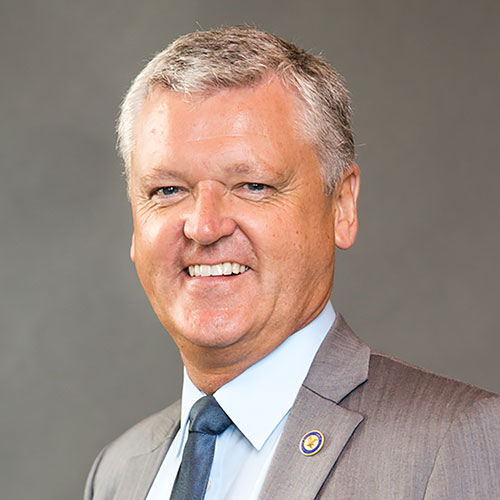

FRANK H. AYERS
Frank Ayers has spent his life using his skills for students, campuses and the university’s national standing. A retired Air Force colonel and master instructor, he helped define Embry-Riddle’s early excellence in flight training, mentoring more than 1,000 students annually and advancing safety and simulation practices that rippled across the industry.
“We owe Dr. Ayers and his wife, Debbie, our thanks for creating the student-first campus that makes Prescott the special place that it is.”
—P. Barry Butler, Ph.D., president
When he became chancellor of the Prescott Campus in 2009, Ayers guided it into a new era of prominence. Enrollment rose sharply, academic programs expanded and the nation’s first College of Security and Intelligence took flight — cementing Prescott as a premier destination for aerospace and STEM education.
CHAMPIONS OF SPIRIT

STEVE RIDDER
Steve Ridder built a dynasty from an empty gym. At 29, he became head men’s basketball coach at the Daytona Beach Campus even though the team had no gym, no scholarships and a discouraging 0–22 record. Over 35 years, he turned grit into greatness — earning more than 800 victories, 20 conference titles, 18 national tournament appearances and the 2000 NAIA national championship. Yet his deepest legacy lives far from any scoreboard.
Guided by his “Student-Person-Player” philosophy, Ridder taught that discipline, gratitude and integrity are the true measures of success. He championed women’s sports by adding volleyball, women’s soccer, tennis and golf, expanding opportunity across campus. Ridder helps students navigate academic, athletic and personal challenges, insisting that every practice begin with intention and end with gratitude.
PAULA REED
Paula Reed’s gift is helping people see their potential. As director of the McNair Scholars Program, she opened doors for hundreds of first-generation and underrepresented students to pursue doctoral study, creating a legacy that continues to expand.
Her leadership in Student Services, the Women’s Center and Employee Engagement strengthened Embry-Riddle’s culture of care and connection. Across every role, her mission remains constant: to lift others, reveal their promise and ensure every Eagle feels supported and inspired to succeed.

ROBERT ‘BOB’ ROCKETT
The traditions Robert “Bob” Rockett helped build define Embry-Riddle’s spirit. Homecoming, athletics, campus ministry and student leadership all carry his imprint. Across 37 years — including 22 as dean of Student Affairs — he shaped a community grounded in connection and care. In his first week in 1974, he moved into the dorms to understand student life firsthand. Of the 2,000 students in Daytona Beach, most were Vietnam veterans, and about a dozen women were enrolled at that time.
“The first night I was there, I heard a motorcycle go through the first floor,” Rockett recalls.
He later preserved history by helping to create the University Archives, preserving audio recordings and digitizing thousands of photos documenting the university’s rise. Named dean emeritus in 2010, he continues his commitment through a planned gift supporting the Rockett Leadership Award.

MARIE ROHLFS and HAROLD SMOKEY WATSON


For nearly five decades, “Ms. Marie” Rohlfs has been the steady heartbeat of Air Force ROTC Detachment 157 at Daytona Beach — a mentor, counselor and guiding force for generations of cadets. Thousands have taken their commissioning oaths under her watch and carried her lessons into service around the world.
Her warmth and wisdom shaped leadership and character. In quiet conversations, she helped cadets find confidence, purpose and the resolve to face challenges with clarity and respect. She reminded them that strength is reinforced with humility and that service begins in how we treat others. Through the Ms. Marie Cadet Assistance Fund that is named in her honor, alumni ensure that future cadets receive the same care she has shown for decades.
Every hum of machinery and glow of light on the Daytona Beach Campus carries Harold “Smokey” Watson’s touch. He started working at Embry-Riddle during a government youth summer program, got a job and never left. For more than 48 years, he has kept the campus running, from the days of buildings with “alphabet soup” names to today’s advanced laboratories and hangars.
Smokey can fix almost anything with little more than wire, patience and pride. Generations of students, faculty and staff have relied on him, and that’s why he stays. “Over the years I’ve helped student organizations with setups, and I’ve built relationships with them I’ll always treasure,” he says. “When they come back to visit as alumni and look for me or see me and holler ‘Hey, Smokey,’ it’s a great feeling. My favorite part is seeing them graduate. I pride myself on setting up that event.”
EDUCATORS AND MENTORS
JIM CUNNINGHAM
Jim Cunningham helped Embry-Riddle find its voice. From 1969 to 2014, Cunningham built a humanities program that asked future pilots and engineers to think critically, write clearly and see aviation within the wider human story. His courses reminded students that technical choices carry consequences and that every flight begins with judgment as much as skill.
Students remember classrooms alive with debate about risk, ethics and purpose. Beyond the lectern, Cunningham served as dean of academics, guided exchanges, advised writers, launched the sailing club, and with his wife, Cheryl, endowed scholarships for student-athletes. In retirement, he continues to mentor as an emeritus leader, offering perspective shaped by decades of teaching.
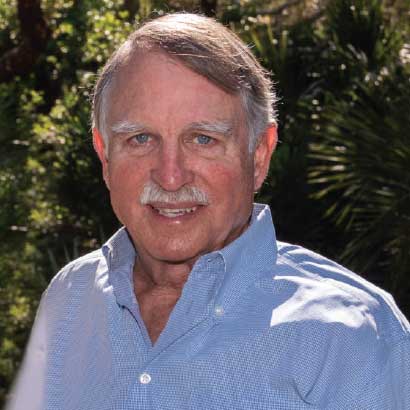

KAT MORAN
Before virtual reality reached the classroom, Kat Moran was already exploring how people and machines learn from one another. A U.S. Air Force veteran and trauma epidemiologist, she spent years investigating aviation crashes in Alaska’s unforgiving terrain before bringing her expertise to Embry-Riddle.
For more than three decades, she has connected discovery to practice — shaping programs in human factors, safety and occupational health. Her research influenced technologies from fighter pilot helmets to virtual crash labs while opening new ways to study risk, human performance and decision making. Through leadership and teaching, Moran shows that safety begins with understanding the person inside the machine.
RICHARD ‘DICK’ SAMUELS
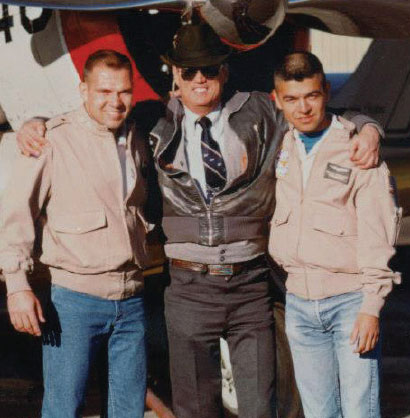
Richard “Dick” Samuels left an imprint that still echoes across the Prescott flight line. A retired U.S. Air Force officer and master instructor, he trained generations of aviators to match precision with integrity. Students still quote his wry humor, flawless checklists and unwavering rule: Do it right, or don’t do it at all.
“There hasn’t been another instructor who has had a more enduring and fundamental impact on my flying.”
—Katie Pribyl (’00), VP, Aircraft Owners and Pilots Association
For Samuels, flight demanded discipline of both mind and heart — a standard he reinforced in every briefing, lesson and quiet word of encouragement. Though he died in 2022, his influence lives on in every careful preflight, each moment of patience and every confident takeoff by those he taught. The scholarship that bears his name ensures his standards and spirit keep new Eagles climbing.
MICHAEL WIGGINS (’76)
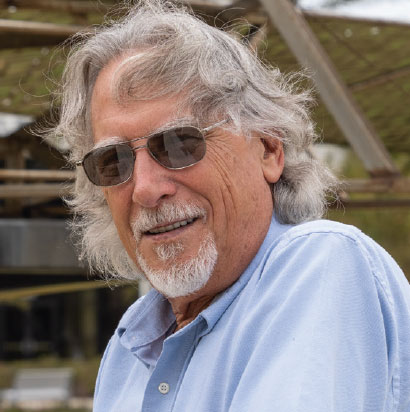
Every Embry-Riddle pilot knows the name Michael Wiggins. As instructor, professor, researcher and department chair, Wiggins helped refine flight education into a model of rigor and purpose. His classrooms and cockpits became places where future aviators learned to fly with precision, lead with character and respect the responsibilities carried into the sky.
“I hope Embry-Riddle will maintain our pioneering roots as we tackle the challenges of the future. Being unique is what made us successful.”
—Michael Wiggins (’76), Professor
Wiggins launched the Sun Seminar flight program, strengthened Embry-Riddle’s national prominence in flight education, and established the Center for Teaching and Learning to deepen the link between research and practice. His mentorship shaped generations who now chart skies he once helped them imagine.
WILLIAM ‘BILL’ WALDOCK
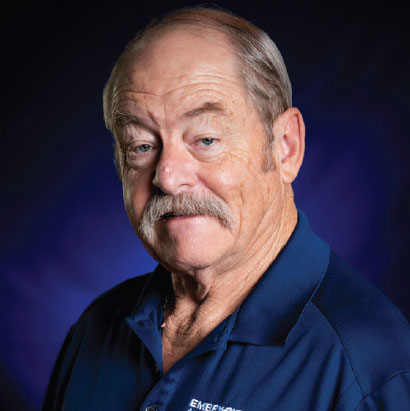
For more than four decades, Professor William D. “Bill” Waldock transformed accident investigation from a specialized field into a cornerstone of aviation science.
A retired U.S. Coast Guard officer and pilot, Waldock participated in more than 300 accident investigations and analyzed over 500 more. He helped create the Robertson Aircraft Accident Investigation Laboratory, the Impact Dynamics Research Facility and the Aviation Safety and Security Archives. His teaching has shaped more than 8,000 graduates now serving in forensics, investigation and regulatory roles.
Waldock’s influential work on crashworthiness, human factors and fire survivability helped shape safer industry practices. The scholarship bearing his name ensures future Eagles inherit his devotion to evidence-based safety.
SARAH THOMAS

For more than four decades, Sarah Thomas has been an anchor of the Prescott Campus. As librarian and now library director, she guided the shift from card catalogs to digital systems and from shelves of books to a network of ideas — always keeping curiosity at the center.
“Sarah was there for me when I was a student, and as someone who went on to work at both Prescott and Daytona Beach, I recognize her as a cornerstone of the campus and, more importantly, of the student experience.”
— Bill Thompson (’87)
Under her care, the Hazy Library is a launchpad for discovery, a place where she guides faculty and students, not just with answers but with questions worth pursuing. Her dedication helps students navigate information with clarity and develop habits of inquiry that follow them through life.