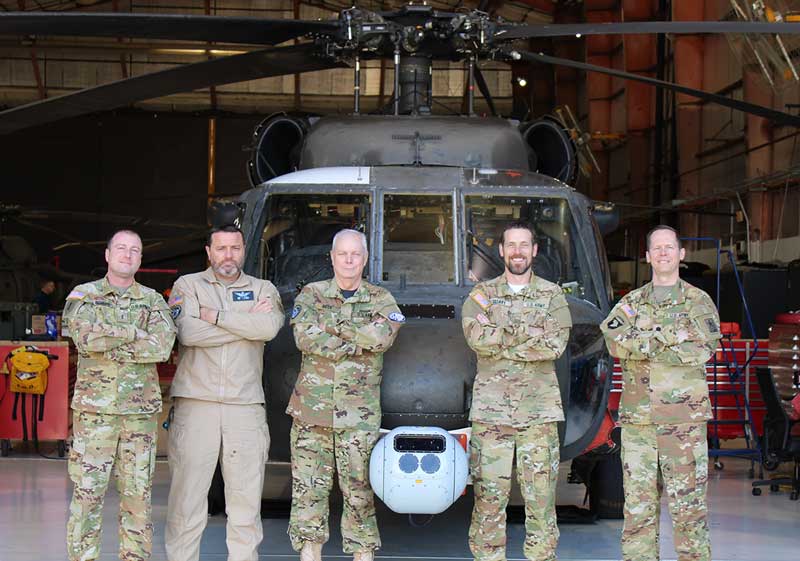
Alumni put the next generation of U.S. Army aviation technology to the test.
It’s a small and highly specialized corner of military aviation. Yet five Embry-Riddle graduates have found themselves working together as experimental test pilots at Fort Eustis, Virginia.
Their job: Put emerging aviation technologies through their paces before those innovations reach Army aircraft and the crews who fly them.
At the U.S. Army Combat Capabilities Development Command Aviation & Missile Center (DEVCOM AvMC), their work spans everything from engines and aircraft structures to advanced avionics, flight controls and systems that improve aircraft performance and survivability.
Some projects begin as sketches on paper. Others involve equipment nearly ready for installation. Working with engineers and researchers, experimental test pilots help determine whether promising designs can deliver in flight.
It’s a demanding profession with a rigorous path to qualification. All Army experimental test pilots graduate from the United States Naval Test Pilot School in Patuxent River, Maryland, whose alumni include more than 90 NASA astronauts. Candidates typically bring more than 1,000 flight hours, strong academic credentials and extensive aviation experience to a highly competitive selection process.
The five Eagles are CW3 David Rische (’09), who earned a bachelor’s degree in Aerospace Engineering; CW5 (Ret.) Sean Merrill (’98, ’12), who holds bachelor’s and master’s degrees in Aeronautical Science; CW5 (Ret.) Nolan Beck (’94), who earned a master’s degree in Aeronautical Science through studies at Prescott, Daytona Beach and in Europe; Col. (Ret.) Mark Cleary (’03), who earned a bachelor’s degree in Aerospace Engineering; and Lt. Col. Greg Lewis (’08), who holds Aerospace Engineering degrees.
Lewis brought the unusual alumni connection to Embry-Riddle’s attention after the five recognized their shared academic roots.
Their paths to Fort Eustis took them through different campuses, disciplines and military careers. Today, they’ve converged in a profession where engineering knowledge and piloting skill meet at the edge of what’s possible.
Five Eagles. One flight test team. And a shared hand in shaping what flies next.