
“You always looked up at the sky. You always wanted to be there.”
Gopi Thotakura’s parents’ words confirm that he always dreamed of flight. He made it to the sky as a pilot, and in May 2024, he went beyond, becoming an astronaut.
Thotakura’s recent journey on Blue Origin’s New Shepherd was driven by a desire not just to fulfill his own dreams but to inspire others in India to aim higher. From a country of more than 1.4 billion people, he became the second Indian in space after cosmonaut Rakesh Sharma in 1984, and the first Indian space tourist.
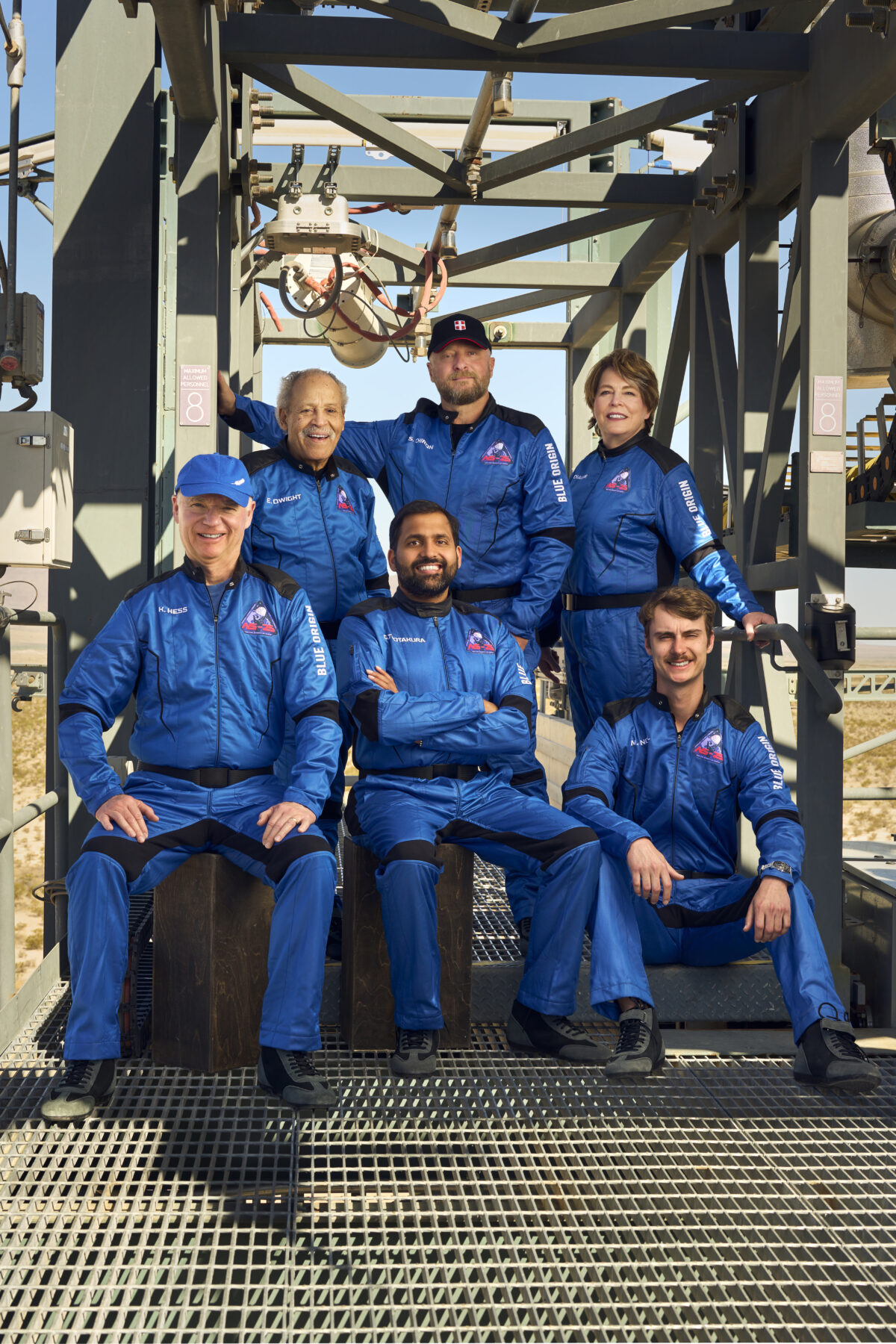
An unwavering passion pulled Thotakura (’15) more than 8,000 miles from his home in India to Embry-Riddle’s Daytona Beach Campus, though the university was not initially on his radar. He began flying at 14 at a flight school in New York during family vacations. An instructor there mentioned Embry-Riddle. After some research and encouragement from a friend, he decided to use the one application his father allowed to aim for his dreams.
Despite skepticism from his peers and the challenges of applying to a foreign university, Thotakura remained determined. “Everybody in my high school told me, you’re not going to get in. They need high grades and they’re so far away,” he recalls. After a long wait, he received the acceptance email. “I thought, ‘Is somebody pranking me?’” he laughs. But it was real, and in 2011, he began studying at Embry-Riddle.
Thotakura graduated as class president in 2015 with a degree in Aeronautical Science, delivering a commencement speech alongside astronaut Nicole Stott (’87).
Entrepreneur, Educator, Adventurer
In 2015, he founded an aviation company in India and a nonprofit non-governmental organization that has helped more than 500 students become pilots. “At every school or university that I went to, when I asked what they wanted to be when they grow up, nobody said astronaut,” he observed. “It’s too lofty of a dream, too aspirational,” was the common sentiment. But he knew dreams are free and that having a visible role model could change that mindset. He has remained immersed in aviation. Over the years, he took on commercial jet flying, bush piloting, aerobatics, seaplane operations and hot air ballooning. His versatility as a pilot is matched by his contributions to medical aviation.
He has completed more than 2,000 medical air ambulance missions, enhancing emergency medical transportation in the Indian subcontinent. “I worked in India as a pioneer in jet medical transport and rescue. I was one of the first people to take Learjets across the country, across countries, and bring Indians back home as a rescue pilot,” he says.
“I would like to make an orbital mission, docking at the International Space Station and spend a few days there.”
Gopi Thotakura (’15)
When he is on the ground, Thotakura is a health-focused entrepreneur in the Atlanta area. He co-founded Preserve Life Corp., an innovative enterprise that focuses on sustainability and holistic health. He has big dreams for a community that integrates advanced healthcare practices and sustainability living principles to create healthy, balanced lives.
Additional entrepreneurial ventures include a role as chief operations officer for Asian Infrastructure PTE and as founder of Charlie Foxtrot Aviation, an air charter services company.
Despite his demanding career, Thotakura incorporates personal challenges into his to-do list. In 2022, he summited Mount Kilimanjaro, demonstrating a combination of determination and a love of outdoor adventure. He plans to scale Everest next. And he has another special flight in mind. “I would like to make an orbital mission, docking at the International Space Station and spend a few days there.”
On a Mission
His journey to space was not easy. It involved a lot of time, effort and support from many people, especially his father. “It wasn’t a one-man thing. I have to give a lot of credit to my dad,” he emphasizes. Despite challenges and setbacks, including a two-year delay to the mission, he remained focused on his goal.
His perseverance paid off. When he boarded a Blue Origin flight, he took a piece of India’s spirit and his dreams with him in the form of his country’s flag. The flight was not just a personal achievement but a milestone for his country. “Now India has been to space. Now you can dream, too,” he says. He also carried items sharing his Eagle status from Embry-Riddle.
As part of the NS-25 mission, he joined a select crew for a suborbital flight that crossed the Kármán line — the boundary between sky and space, offering moments of weightlessness and stunning views of Earth. This mission highlighted Blue Origin’s commitment to sustainability, with nearly 99% of New Shepard’s components being reusable.
The sights and sensations of the mission are lasting memories. “The weightlessness was amazing,” he recalls. “I could not get out of my seat belt. So people should listen to training — and Blue Origin is meticulous about all preparation.
Despite the challenges of adapting to microgravity, he embraced the experience with enthusiasm, “floating around, doing backflips, throwing some flags.” The spaceflight was a profoundly focusing experience. “It may sound trite, but you see how tiny you are in comparison to this majestic blue ball.” The view from space reinforced his commitment to sustainability and his drive to inspire the next generation.
The Shock of Re-Entry
After his flight, Thotakura was flooded with interview requests and invitations to speak at high schools and colleges. He was a little overwhelmed but clearly delighted that so much of the interest came from India.
“The day news about the mission aired, hundreds, if not thousands, of queries from India flooded in overnight.”
Gopi Thotakura (’15)
“The day news about the mission aired, hundreds, if not thousands, of queries from India flooded in overnight,” he shares. He received messages of gratitude and inspiration, particularly from young people who now see space as a destination within their reach.
One message stood out to him: “Congratulations, sir, for opening up the doors to space for all us Indians who share your passion.” This came from a young entrepreneur with a 94-page proposal for making payloads accessible for Indians to send to space. “Now I’m going to chase my dream,” the entrepreneur promised. For Thotakura, this was the true success of his mission.
Flight Plan for a Shared, Sustainable Future
He remains committed to supporting the next generation of explorers, particularly women. His nonprofit organization in India actively encourages women to become pilots. “Most of the pilots we sponsor are women because I believe that men have the ability to find the money or talk their way through,” he says. “Some women need a little push because they are often smart, but shy.” Thotakura’s journey from a young boy trying to see beyond the stars, to pilot, to space ambassador is a testament to the power of dreams, determination and the support of loved ones. “If you have the power to make change, you should not always look at yourself. You should look at who you can support if they have the potential to do it better than you,” he says, embodying a spirit of adventure, humanitarianism and commitment to paving the way for others.
His purpose is not just to reach the stars, but to bring the stars closer for everyone, especially those in his homeland of India.
“Humans instinctually long to go outside. Why? I think we want to go to open spaces to look up to the sky.”
Now, all sky-seekers also have someone new to look up to as well.