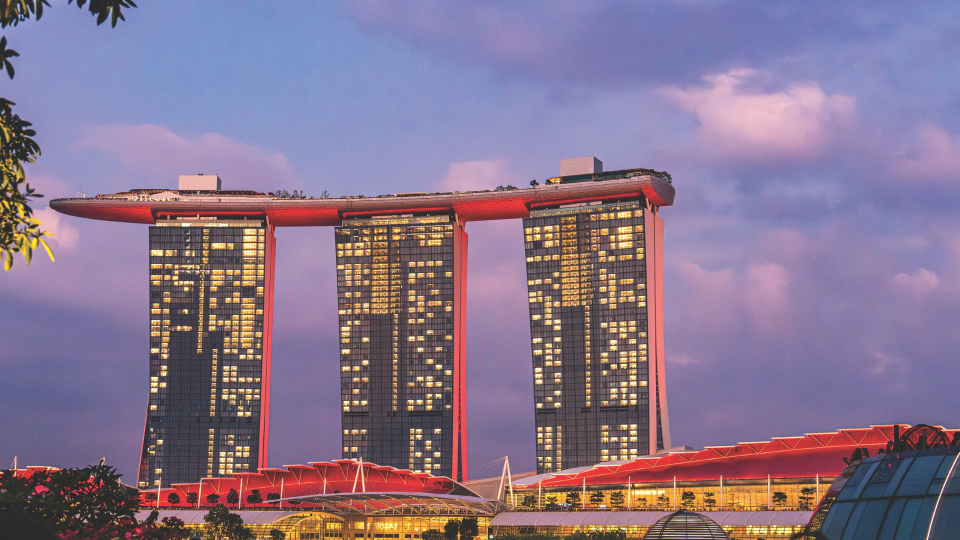
When Embry-Riddle Asia launched its first professional space-operations course in Singapore this spring, it sent an expert who had grown up with space exploration as a family business: Dr. Andrew “Andy” Aldrin, the youngest son of Apollo 11 astronaut Buzz Aldrin.
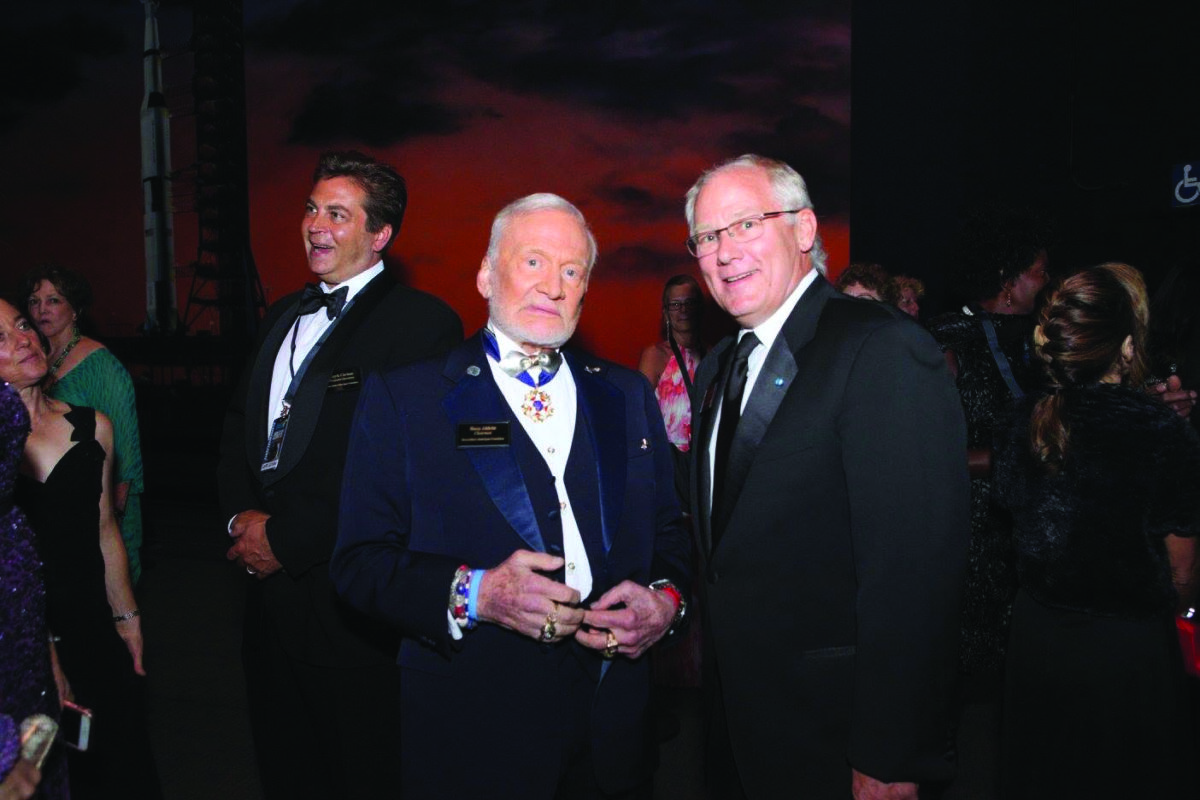
But Aldrin, Embry-Riddle Worldwide’s executive director of space programs and associate professor, brought more than a famous surname. His career spans executive roles at Boeing, United Launch Alliance and lunar-lander startup Moon Express, along with academic appointments at Florida Tech and expertise in business, political science, and science and technology policy.
That experience is particularly relevant to Singapore, where Embry-Riddle is extending its longstanding aviation presence into space education, business and policy.
“The space domain is one of the most dynamic and consequential sectors emerging on both the national and international stage,” Aldrin says.
He sees Singapore as particularly well-positioned to help shape its future.
“The pace of development across Asia is extraordinary,” he says. Singapore’s “particular economic, educational and governmental ecosystem” makes it “uniquely positioned to play a leadership role in the evolving space economy.”
The three-day, in-person course drew professionals from academia, industry and government in Singapore, Thailand, the Philippines, Australia and Brunei. Delivered in partnership with Space Faculty — a Singapore-based education, talent-development and deep-tech innovation company — the program examined space commercialization, public-private partnerships, risk and the projected growth of the global space economy.
Over three days, Aldrin helped professionals from five countries consider what their own futures in space might look like. They brought different national priorities and professional perspectives to the room, but shared a question: How could their countries turn the promise of space into practical opportunities?
“The most exciting thing about this course was the level of enthusiasm and the opportunity for helping develop the future leaders of Singapore’s space programs.”
Dr. Andrew Aldrin
For Beatrice Toring, a university administrator from the Philippines, the course clarified how “policy decisions, economic models, regulatory frameworks, education systems and international cooperation all shape the direction of space development,” she says.
Aldrin was equally struck by the participants’ enthusiasm.
“The most exciting thing about this course was the level of enthusiasm and the opportunity for helping develop the future leaders of Singapore’s space programs,” he says. “I think we can develop Singapore as a space education hub for the Asia Pacific region.”
The case for space education extends well beyond exploration. Toring said Aldrin emphasized the practical value of space operations in communications, disaster management, navigation, climate monitoring and economic growth. Space, in that context, is not a distant frontier but infrastructure with consequences for everyday life on Earth.
The professional course is part of a broader expansion of Embry-Riddle’s academic programs in Singapore.
According to Matthew Flaherty, vice chancellor and head of Embry-Riddle Asia, the campus has added a Space Studies minor to its undergraduate offerings and is exploring an in-person, space-related master’s program. The goal is to “further strengthen the region’s space talent pipeline.”
Embry-Riddle has maintained a presence in Singapore since 2011 and now serves 350 students. In 2024, its Asia Campus relocated to a training center at Seletar Aerospace Park, where it is co-located with Air 7 Asia. The campus celebrated its formal opening in October 2025 with an aerospace-safety summit.
The site also houses ERAU Asia Institute, a private education establishment registered with Singapore’s Committee for Private Education, part of SkillsFuture Singapore.
“The space domain is one of the most dynamic and consequential sectors emerging on both the national and international stage.”
Dr. Andrew Aldrin
The expansion into space draws on Embry-Riddle’s existing programs in air traffic management simulation, aviation maintenance, uncrewed aircraft systems and emerging urban air mobility technologies. Its training offerings include programs approved by the Civil Aviation Authority of Singapore.
For Aldrin, that aviation foundation gives the university a starting point as Singapore establishes its own national space agency and expands its role in the international space economy.
Embry-Riddle already has a “very solid” reputation in Singapore’s aviation industry, he says. “We want to extend that recognition into space.”
The opportunity extends beyond Singapore’s borders. Aldrin sees the country’s regional connections and international reputation as assets in attracting partnerships, educating professionals and preparing the next generation of space leaders.
“Singapore has a strong reputation in the U.S. and European space communities,” he says. “Everyone I have spoken with is excited about the potential for collaboration with Singapore.”