
“To be up close… you could see the detail with the naked eye as it lifted off the launchpad,” David Hitt (’24) says of the Artemis II launch. “I’ve been the person on the causeway, trying to get scraps of information. This time, I was the person who knew.” The difference is not just distance but position. For most of his career, Hitt stood outside NASA’s Space Launch System (SLS), translating it for others in various communication roles for the organization. But on Artemis II, he stood inside it. Today, as a payload integration manager and senior systems engineer with Amentum supporting NASA’s SLS, his work sits at the seam — between partners, disciplines and requirements — where things either come together or don’t. His job is to make sure they do.
The Fork That Wasn’t There

Hitt grew up in Huntsville, Alabama — Rocket City — with a clear trajectory: engineer, NASA, moon rockets. What changed wasn’t ambition so much as confidence. He let himself step back from the math, from the physics, from the path he had drawn too early and too cleanly. Instead, he pivoted to journalism at Ole Miss, found his footing in small-town newspapers and built a career explaining the machines rather than designing them.
It felt like a fork in the road. In retrospect, it wasn’t. A family connection led to a writing role for NASA’s education website, and the two paths — space and storytelling — aligned into one job. From there, he moved deeper into communications, working in outreach, speechwriting and public engagement, learning how to translate complex missions in real time for audiences who needed to understand not just what was happening, but why it mattered.
In his free time, he co-authored space history books with astronauts, including work on Skylab astronauts.
The astronaut office took notice of his communication work, awarding him a Silver Snoopy — a prestigious NASA honor for flight safety and mission success, given by astronauts themselves. The pin came from a then-new astronaut, Victor Glover.
Years later, Glover would circle the moon on Artemis II — the same mission Hitt supported from the ground. “Ten years later, he’s gone from brand new astronaut to circling the moon as part of this mission that I got to also be part of,” Hitt says. “It was incredible.”
At NASA, the distance between telling the story and flying the mission is narrower than it appears.
The Plot Twist
The shift from communicator to engineer didn’t begin with a formal plan. It began with a conversation.
At a conference in Huntsville, Hitt met Robin Colwell, senior assistant director of Student Recruitment at Embry-Riddle. He described the gap he still felt — the sense that he had stepped around something he once meant to do and wasn’t sure he could return to.
She didn’t see a gap. She saw a way forward, and the first step was clear: Embry-Riddle’s master’s program in Systems Engineering. She was confident he could meet the challenge.
“Like many prospective students I speak with, David just needed a little guidance and affirmation that his dreams are possible. There is a path, and we are going to walk you through it step by step,” says Colwell.
What came next was not a gradual easing in but a test. The prerequisite course — nine weeks of statistics, probability, calculus and economics — was compressed and unforgiving. Hitt entered expecting to confirm his earlier doubts, talked through the risk with his family and prepared for the possibility that he had been right to step away years before.
Instead, he found something else.
He thought of “The Monster at the End of This Book,” the Sesame Street story where Grover spends every page warning about the monster ahead — only to discover, at the end, that the monster is himself.
“That was my calculus journey,” Hitt says.
He finished with a 98. From there, the path did not so much open as continue—into a graduate degree and, eventually, a new role that no longer described the mission from the outside.
It’s All Triangles
Ask Hitt how journalism translates to systems engineering and he reaches for a familiar shape. In journalism, the inverted pyramid leads with what matters and widens into detail. In systems engineering, the V-model begins with the whole, breaks it down and builds it back up through validation. The orientation differs, but the logic holds.
The deeper connection, though, is less about structure than about people. As a reporter, Hitt learned to sit between individuals and teams who did not yet understand each other—to hear what each one meant, not just what they said, and to connect those threads into something usable. Systems engineering formalizes that instinct at scale. In complex systems, progress depends not just on expertise but on how well that expertise connects.
The Conductor
In his current role, that connective instinct is operational. As a payload integration manager supporting NASA’s Space Launch System, Hitt works across international partners, internal engineering teams and mission requirements, ensuring that each payload meets the standards required to fly. The constraints — mass, volume, safety, timing — are fixed. The work lies in aligning the people navigating them.
He is not the deepest expert in any one domain. He is the one who knows where the expertise lives and how to bring it together before something breaks. The work is collaborative by necessity, and the friction between perspectives is not something to eliminate but something to use. It is often where better solutions emerge.
A Step, Not a Goal
Hitt is wary of the word goal because it suggests an endpoint. Artemis II is a step. A lunar landing will be a step. A sustained presence on the moon — another step. The logic extends outward from there.
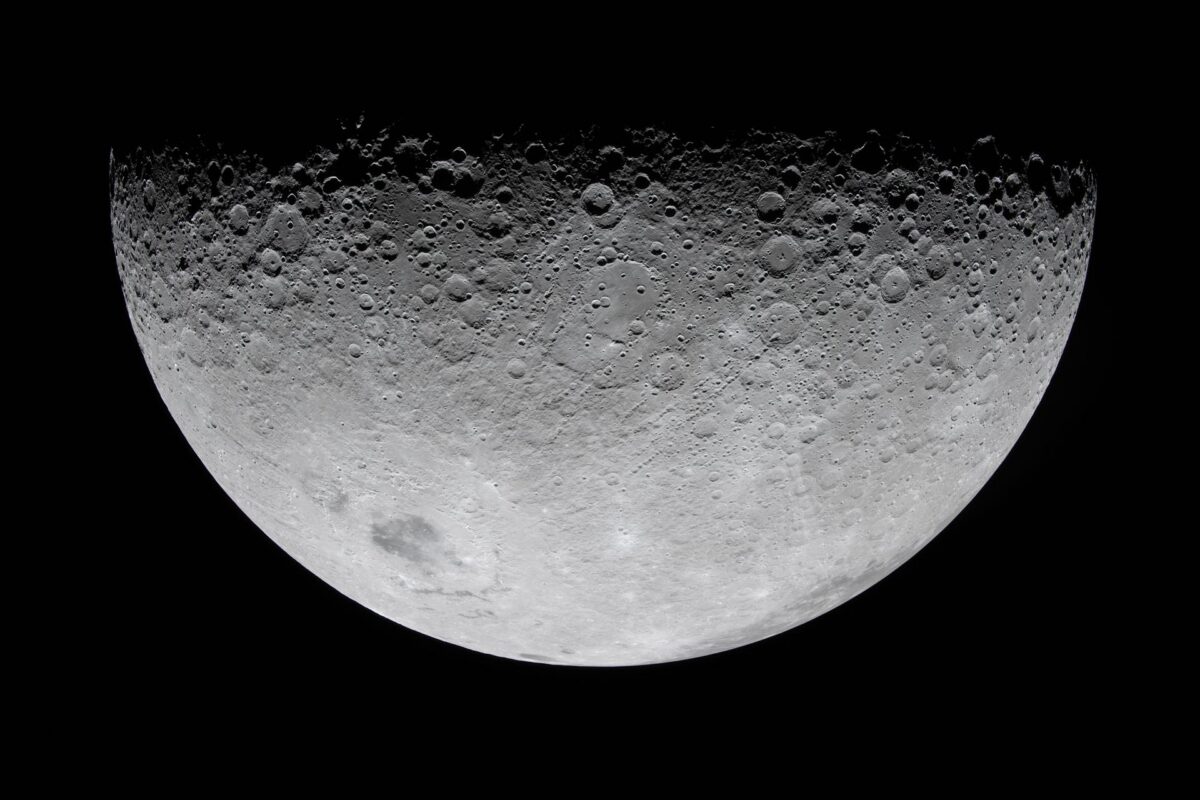
From his vantage point, that progression is built on work that rarely draws attention: teams pursuing narrow questions, experiments that won’t make headlines, incremental gains that accumulate into capability.
“People don’t appreciate how many teams there are with their one little mystery,” he says. “If we can solve this one little mystery, how much smarter will we be? How much safer will future missions be?”
The astronauts circle the moon. The system that gets them there is built, piece by piece, by people solving problems most of the world will never see. “This is not an effort with a goal,” Hitt says. “This is a mindset of exploration.”
The Base of the Triangle
On that Artemis II launch day, the light, the sound, the physical force of the rocket pressing into the body resolved into something immediate — and whole. The long connective path of Hitt’s career, from observer to storyteller to engineer, closed in a single moment and took its full shape.
He wore his Embry-Riddle shirt to the pad. When the rocket cleared the tower, he pulled out his phone and sent a message to Robin Colwell.
“Hey. Look where I am because of you.”
The roles he had once treated as separate no longer held apart. The instinct to lead with what matters and the discipline to build from the whole and return to it resolved into the same way of thinking. The fork in the road he thought he had taken years earlier was never there. It was a pivot to something that gave new shape and meaning to his career. And Embry-Riddle was the base that made that shape hold.